

China AI Weekly Digest summarizes the week’s big news, model updates, compute, policy, products, and research, drawn from the China AI Index newsfeed. The digest is (mostly) compiled and drafted by an AI agent using credible news outlets; I fact-check and edit it. Read to the end for “One to Watch” as this week’s pick.
This week: 297 stories tracked (0 editor picks, 98 English-language, 199 Chinese-language 🇨🇳) over 2026-11-15–2026-11-22.
The Big Three
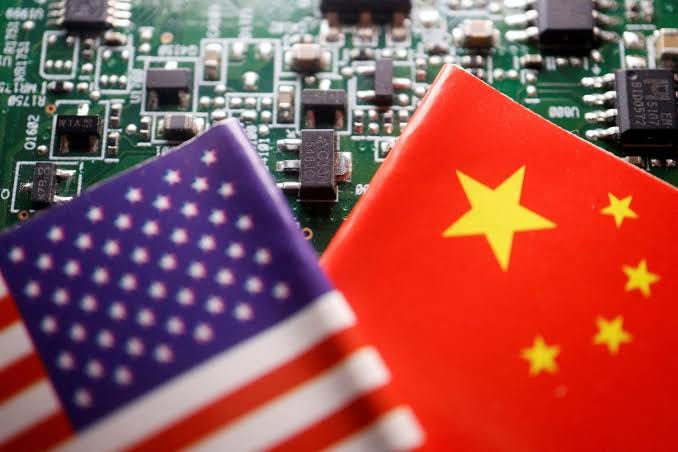
Washington extends its chip controls to remote computing access. The U.S. published rules targeting Chinese companies’ access to advanced chips through overseas data centers, bringing rented computing into the export-control regime. The rule took effect on November 19 and also tightened requirements for chip fabricators and packagers. Reuters reported that TSMC was suspending some previously permitted advanced manufacturing orders from Chinese designers. These are separate routes to computing power—renting foreign servers and manufacturing proprietary chips—now facing tighter scrutiny together. (Reuters/Federal Register)
DeepSeek’s reported RMB105.5 billion financing gains a visible ownership structure. Corporate-registration changes added Hangzhou Chengyan as a shareholder in DeepSeek’s operating company, while the investment vehicle added 31 partners. Chinese reports identify participants linked to Tencent, CATL, China Mobile and several investment firms. This round reaches approximately RMB105.5 billion at a post-money valuation of approximately RMB615.5 billion, citing earlier media reporting. The vehicle’s registered contributions are a separate accounting figure. (第一财经/财联社)
Tencent puts numbers on the cost of its AI push. Tencent reported third-quarter revenue of approximately RMB207.3 billion, up 8%, alongside RMB81.4 billion in capital expenditure. Cash payments for capital expenditure were approximately RMB65.1 billion. New AI products weighed on earnings, while Tencent disclosed more than 10 million daily WorkBuddy users collectively consuming over 100 trillion tokens a day. Those figures show the infrastructure demand behind an application that is already being used at scale. (第一财经/Tencent)
Models
Model releases focused on lower task costs, downloadable weights and higher-resolution creative work.
Alibaba launched Qwen4-Max with native vision and a one-million-token context window. Alibaba says average task costs fall by roughly 60%, alongside stricter cybersecurity safeguards. The cost figure is the company’s assessment and depends on the tasks and settings used. (SCMP/@Alibaba_Qwen)
Tencent released Hy4 Flash and subsequently published its weights, including FP8 and base versions. The multimodal model has 224 billion total parameters, 12 billion active parameters and a million-token context window. Tencent positions it for everyday productivity tasks. (爱范儿/@TencentHunyuan)
Tencent separately announced downloadable weights for flagship Hy4, describing a multimodal model with 770 billion total parameters and 49 billion active parameters. (@TencentHunyuan)
SenseTime released SenseNova Loop-9B with weights and code. Its architecture reuses intermediate layers to increase computational depth within a nine-billion-parameter model. The release supports text and image input, with applications spanning reasoning, coding and tool use. (第一财经/@SenseTime_AI)
Kuaishou launched Kling Image 4.0 on November 17. The company says it supports native 8K output, up to ten coordinated images from one description and extensive text within images. Its emphasis is on producing complete advertising, commerce and design assets. (雷峰网)
Seedance 2.5 added 4K generation, including clips up to 30 seconds and workflows for editing and extending existing material. BytePlus also announced API availability. (爱范儿/@BytePlusGlobal)
Compute
Alibaba’s cloud results showed rising demand as financing for overseas chip access came under pressure.
Alibaba’s Q3 2026 revenue rose 10% to RMB271.5 billion, while net profit attributable to shareholders surged 207% to RMB64.5 billion. External cloud customer revenue grew 64%. AI cloud and compute revenue increased 53% to RMB61.0 billion. Capital expenditure climbed 60% to RMB50.5 billion as Alibaba expanded AI infrastructure, although tighter U.S. chip restrictions could affect overseas data-center plans. (AP)
Bloomberg reported a freeze on a US$480 million loan intended to finance Nvidia chips for ByteDance, following the new U.S. access restrictions. (Bloomberg)
DeepSeek users encountered limits on its free app and website, including daily allowances and long conversations. DeepSeek didn’t explain the limits or when they would lift. (第一财经)
Funding
New financing backed a former Qwen leader, laboratory automation and the data infrastructure behind robotics.
Pragmatik Labs, founded by former Alibaba researcher Lin Junyang, raised tens of millions of dollars at a US$5 billion valuation, Bloomberg reported. The company’s previous financing in August valued it at US$2 billion. The latest valuation is separate from the capital raised. (Bloomberg)
MegaRobo raised nearly US$200 million, with Oman Investment Authority and CMB International participating alongside existing investors. The company plans to fund core technology and international expansion of its AI-for-science business, which combines software, robotics and laboratory automation. (Bloomberg/MegaRobo)
ByteTree raised RMB50 million in pre-A financing from investors including Yuanhe Hou望, Yifeng Capital and robot developer Galaxea. The Suzhou company plans to expand physical-AI data pipelines, datasets and embodied algorithms, building on its autonomous-driving data business. (财联社)
Policy
Governments addressed model transparency, service registration and human control over AI.
The Trump administration is considering requiring U.S. companies to disclose their use of Chinese AI models, Reuters reported. Discussions involve Treasury and the White House science-policy office. The proposal could require website disclosures, with its adoption and formal rulemaking status still uncertain. (Reuters)
China’s internet regulator reported 133 additional generative-AI service filings for September and October, including three on-device mobile services and one anthropomorphic interaction service. Another 224 applications or features using already-filed models completed local registration. (第一财经)
During his November 19 meeting with Donald Trump in Shenzhen, Chinese President Xi Jinping called for communication on AI safety and for keeping AI under human control. China’s account also described Trump advocating cooperation on “superintelligence.” (财新)
Products
Office agents gained operating capabilities, while an American music platform built a video tool on Chinese weights.
WorkBuddy introduced computer control in public beta for macOS and Windows. It can recognize interfaces and perform clicks, typing and scrolling without a target application exposing an API. Users need version 5.11.0 or later and the required permissions. (第一财经)
Qwen Office’s commerce edition opened to all merchants and added a brand knowledge base. Merchants can upload store links, past creative work and design rules so the agent can reuse their brand context when generating images, video and copy. (雷峰网)
Suno introduced Visuals using H3 Move, a model adapted from MiniMax’s open-weight H3 video model. Suno says it optimized the model with its own data for music workflows, bringing song creation, video generation and singing lip synchronization into one product. (量子位)
Vidu announced MCP and command-line tools that let developers invoke its video workflows from agents and terminal environments. (@ViduAI_official)
Research
Scientific prediction and robot deployment received more concrete evaluation tools.
Science Prediction Universe evaluates whether models can predict the ordering of wet-lab outcomes across 116 tasks and 4,207 experiments. Its tests expose substantial differences between measurement targets, making broad claims that a model is “good at chemistry” difficult to assess without task-level results. (量子位/arXiv)
Tianjin University and Zhipu introduced Tianhua Kaiwu, an enzyme-design foundation model connected to automated synthetic-biology equipment. The developers plan research and industry trials, linking proposed enzyme sequences with experimental construction, testing and subsequent model improvement. (第一财经)
Huawei Cloud introduced CloudRobo-WM1.2 and described testing across five robot platforms and 13 manipulation tasks. Its wider CloudRobo platform connects data collection, training, simulation and deployment. Model weights, inference code and post-training code are scheduled for November 30. (量子位)
One to Watch

